The United States and World Trade: Future Directions
Event date
The Council on Foreign Relations hosted a symposium on October 16, 2017, which featured four sessions and brought together distinguished trade leaders and innovative thinkers to address the trade policies of the United States and their international implications in North America and East Asia, as well as the possible effects on the global trade architecture and the World Trade Organization.
Session One: NAFTA Renegotiation: Renewal or Expiration?
Transcript
This is the first session of the “The United States and World Trade: Future Directions” symposium.
This symposium brings together distinguished trade leaders and innovative thinkers to address the trade policies of the United States and their international implications in North America and East Asia, as well as the possible effects on the global trade architecture and the World Trade Organization.
ALDEN: Great, thank you. Welcome, everybody. My name is Edward Alden. I’m a senior fellow here at the Council on Foreign Relations, and helped organize this symposium, along with my colleague, Miles Kahler. We have got a tremendously exciting day ahead of us, I think, including—you know, just a quick aside. As you know, these things are always scheduled far in advance. And you try to pick the best time when people might be interested. Well, we certainly had no way of knowing it was going to be the four round of NAFTA negotiations, and the one in which the administration was tabling all of its most contentious proposals. So our timing turned out to be far better or worse, I suppose, depending upon your perspective, than we could have hoped.
So we have a great day...
Session Two: China and the United States: Governing a Contentious Bilateral Trade and Investment Relationship
Transcript
This is the second session of the “The United States and World Trade: Future Directions” symposium.
This symposium brings together distinguished trade leaders and innovative thinkers to address the trade policies of the United States and their international implications in North America and East Asia, as well as the possible effects on the global trade architecture and the World Trade Organization.
YUAN: Well, welcome to the second session of today’s Council on Foreign Relations symposium on “The United States and World Trade: Future Directions.” This session is titled “China and The United States: Governing a Contentious Bilateral Trade and Bilateral Relationship.”
I’m Sharon Yuan. I’m the managing partner and general counsel at the Asia Group, and I have with me today three distinguished panelists. Let me go ahead and start introducing from my right.
Scott Kennedy, who is the deputy director, the Freeman Chair in China Studies and the director of the Project on Chinese Business and Political Economy.
I have Wei Liang, who is the professor from Middlebury Institute of International Studies at Monterey, and she’s the co-editor of China and Global Trade Governance.
And then we have David Dollar, who is the senior fellow for Foreign...
SESSION III: The United States, Trade Remedies, and the World Trade Organization (WTO)
Transcript
This is the third session of the “The United States and World Trade: Future Directions” symposium.
This symposium brings together distinguished trade leaders and innovative thinkers to address the trade policies of the United States and their international implications in North America and East Asia, as well as the possible effects on the global trade architecture and the World Trade Organization.
ALDEN: Thank you very much. Everyone will be straggling back in from lunch, is my guess. I want to thank everybody for coming. Welcome you to this third—wow, that is really loud. I’m going to move that down just a little bit. Welcome you to this third panel session, which is the discussion on “The United States, Trade Remedies, and the World Trade Organization.”
I am delighted to be joined up here on the stage, on my far right, by Chad Bown. Next to him, Scott Paul. And on my immediate right by Kellie Meiman Hock. Chad is a senior fellow at the Peterson Institute, former senior economist at the Council on Economic Advisors and lead economist for the World Bank. Scott is president of the Alliance for American Manufacturing, co-author of the book “Remaking America”, serves on...
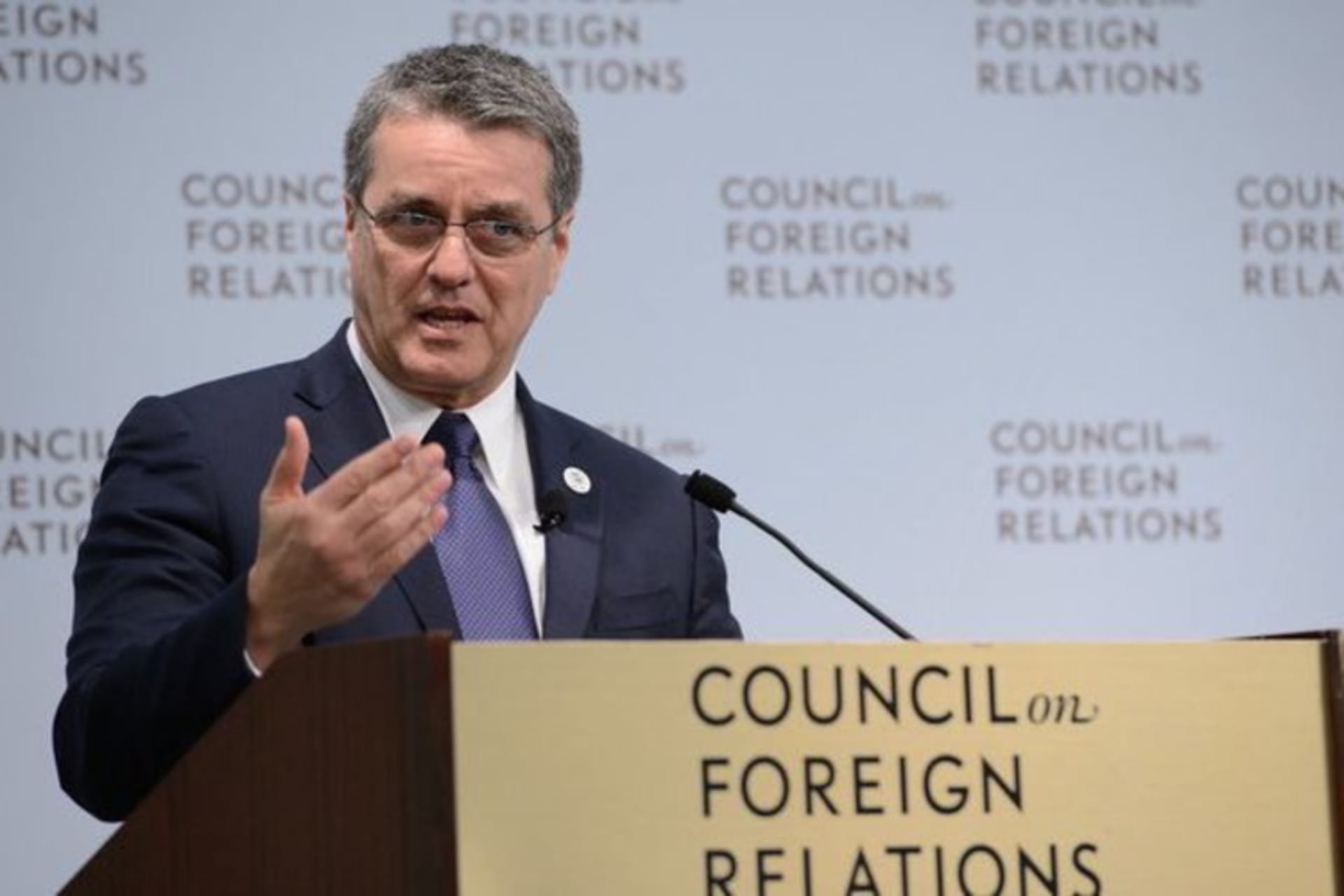
Keynote Session: A Conversation with Roberto Azevêdo
Transcript
This is the final session of the “The United States and World Trade: Future Directions” symposium.
This symposium brings together distinguished trade leaders and innovative thinkers to address the trade policies of the United States and their international implications in North America and East Asia, as well as the possible effects on the global trade architecture and the World Trade Organization.
FARRELL: Hello. Good afternoon.
We’re bringing it home now, but I am delighted for just a couple minutes to introduce to you Roberto Azevêdo. You’ve seen his bio. He doesn’t need much introduction, but he’s the director-general of the World Trade Organization—the sixth director, in fact—and he’s been there since 2013. As you’ll see in his bio, he’s had a long and distinguished career as a Brazilian diplomat, certainly the Brazil chief trade negotiator in Doha and many other areas. But I’d like to point out that I think his first diplomatic posting was here in D.C. So welcome back, and we’re delighted to hear you. Thank you for joining us.
AZEVÊDO: Well, thank you very much, Diana.
Good afternoon, everybody.
It was indeed my first posting. It sounds like pre-history now, but—(laughter)—yeah, it’s always nice to...